
Professional legal photography is the single most powerful trust signal on any law firm website. Consistent attorney headshots can increase website conversion rates by up to 161%. That number reflects a simple truth: potential clients decide whether to contact you based on what they see before they read a single word. With over 92% of legal consumers researching attorneys online before making contact, your photography is not decoration. These law firm website photography tips will help you get it right the first time.
1. Why authentic photos outperform stock and AI images
Authentic photography is a direct E-E-A-T signal, meaning it demonstrates Experience, Expertise, Authoritativeness, and Trustworthiness to both visitors and search engines. Stock photos and AI-generated images may look polished, but they signal to clients that your firm is hiding behind a generic facade. Real photos of real attorneys build the emotional connection that moves a prospect from browsing to calling.
AI imagery can work for conceptual or decorative content, such as abstract legal scales or background textures. The line is clear: never use AI or stock images for attorney portraits, team photos, or office environments. Those images are the core of your brand identity, and clients notice when something feels manufactured.
Pro Tip: Ask your photographer to shoot a few candid moments alongside formal portraits. A natural photo of two attorneys reviewing documents together communicates collaboration and approachability far better than any stock image.
- Authentic photos act as proof of identity and firm culture
- Stock images are often recognized by visitors, which destroys credibility instantly
- AI-generated faces still produce subtle distortions that trained eyes catch
- Real office photos show clients what to expect when they walk through your door
2. What types of photos every law firm website needs
The best photos for law websites fall into four clear categories: individual headshots, team portraits, office environment shots, and lifestyle or work-in-action images. Each category serves a distinct purpose in telling your firm's story. Missing any one of them leaves a gap in how clients perceive your practice.
Individual headshots must be consistent in lighting, crop, background, and attire across every attorney on your site. Inconsistency signals disorganization, even if the individual photos are technically excellent. A partner's headshot shot in natural light against a white wall should not sit next to an associate's photo taken in a dark office with a phone camera.
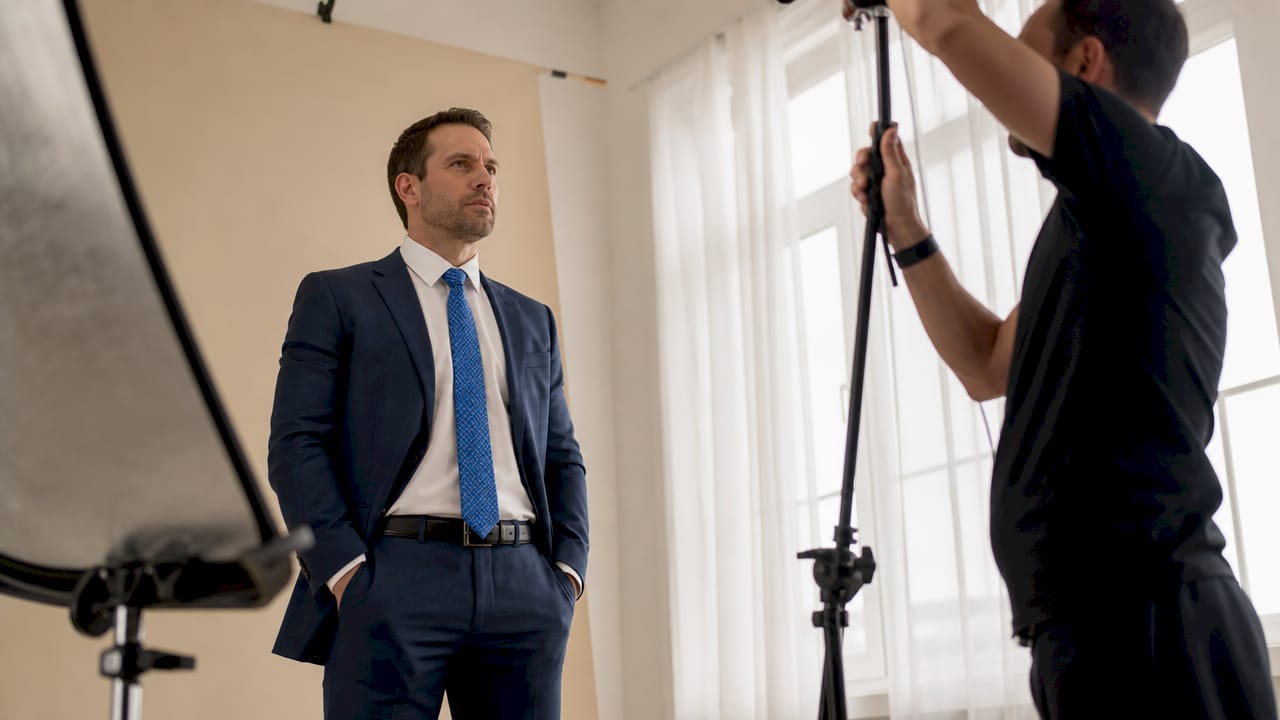
Office environment photos show clients the physical space where their legal matters will be handled. A well-lit conference room or a clean reception area communicates professionalism before a client ever speaks with your staff. Lifestyle shots, such as an attorney consulting with a client or reviewing case files, add warmth and context that formal portraits cannot provide alone.
Pro Tip: Match your photography style to your firm's brand tone. A boutique estate planning firm should use warm, approachable lighting. A large litigation firm may favor cooler, more formal tones. Your law firm color scheme and photography should reinforce each other.
- Headshots: consistent lighting, background, crop, and attire for every attorney
- Team portraits: full group and practice-area subgroups
- Office shots: reception, conference rooms, and common areas
- Lifestyle images: attorneys at work, client consultations, and team interactions
3. How trust forms in milliseconds from your photos
Humans form trust judgments from a face in as little as 100 milliseconds. That speed means your headshot communicates competence and warmth before the visitor consciously processes it. The challenge is that only 22% of Americans find lawyers trustworthy as a profession. Your photography must close that gap before your words get a chance.
A direct gaze, a genuine smile, and open body language all contribute to a positive first impression. Crossed arms, a stiff posture, or a forced expression work against you. Quality headshots build confidence faster than any written bio and help potential clients overcome the skepticism that keeps them from reaching out.
The goal is to project both competence and approachability at the same time. These are not opposing qualities. A well-executed portrait can show authority through posture and attire while showing warmth through expression and lighting. Getting that balance right is the core challenge of professional legal photography.
4. Technical specs and platform requirements for attorney photos
Attorneys need professional photos ready for at least nine distinct platforms, including their firm website, legal directories, LinkedIn, email signatures, pitchbooks, internal systems, and media profiles. Each platform has different size and resolution requirements. Planning for all of them before the shoot saves significant time and money.
Justia recommends 640x640px images, while FindLaw requires a minimum of 216x216px. Your website may need a horizontal banner crop, while LinkedIn uses a square format. Shooting at the highest possible resolution and planning crop variations upfront means one session covers every platform without re-shoots.
Pro Tip: Create a shot list that specifies the exact crops and orientations you need for each platform before the shoot day. Share it with your photographer so they frame every shot with those requirements in mind.
| Platform | Recommended Size | Format |
|---|---|---|
| Firm website (headshot) | 800x800px or larger | JPEG or PNG |
| Justia directory | 640x640px | JPEG |
| FindLaw directory | Minimum 216x216px | JPEG |
| LinkedIn profile | 400x400px to 7680x4320px | JPEG or PNG |
| Email signature | 100x100px to 200x200px | JPEG |
Mobile responsiveness adds another layer. Images must load fast on mobile devices without sacrificing quality. Compress files using tools like Adobe Photoshop's export settings or a web-specific compression workflow, targeting file sizes under 200KB for headshots without visible quality loss.
5. How to create a visual standard document
A visual standard document co-authored by your photographer and firm leadership defines every variable that affects image consistency. This document specifies background color, lighting setup, crop dimensions, clothing guidelines, and post-processing style. It is the single most effective tool for maintaining brand cohesion as your firm grows and hires new attorneys.
Without a visual standard, each new hire's headshot becomes a negotiation. The result is a team page that looks like a collection of photos from different firms. A written standard removes that ambiguity. New attorneys get photographed to the same spec as founding partners, and the site looks unified regardless of when each photo was taken.
The document should also address editing style. Specify whether skin retouching is minimal or moderate, whether backgrounds are pure white or slightly warm, and whether color grading is applied. These details seem minor until you see a team page where half the photos look cool and clinical and the other half look warm and casual.
6. How to plan and execute a law firm photoshoot efficiently
Efficient execution starts with scheduling. Attorneys bill by the hour, and a disorganized shoot wastes both time and money. Block shoot time in 15-minute slots per attorney, and have a clear order prepared so no one waits longer than necessary.
Mobile studio setups allow photographers to bring professional lighting, backdrops, and equipment directly to your office. This eliminates travel time for attorneys and keeps disruption to a minimum. A skilled photographer can photograph an entire firm of 20 attorneys in a single morning using this approach.
Pre-shoot preparation makes a measurable difference in results. Send every attorney a written brief covering attire guidelines, grooming expectations, and what to expect during the session. Specify that solid colors photograph better than busy patterns, that dark suits read as authoritative, and that jewelry should be minimal. A five-minute brief prevents hours of inconsistency.
- Confirm all attorneys' availability and block 15-minute slots per person
- Send a written attire and grooming brief at least one week before the shoot
- Set up the mobile studio in a consistent location within the office
- Shoot all headshots before moving to group or lifestyle images
- Review images on a laptop during the shoot to catch any issues immediately
Pro Tip: Photograph your most senior partner first. Their images set the visual tone for the entire session, and the photographer can calibrate lighting and framing to match that standard for every subsequent subject.
7. Common mistakes that undermine law firm imagery
Outdated photos are the most common and damaging mistake on law firm websites. An attorney's headshot from 2015 creates a disconnect when a client meets them in person in 2026. That gap erodes trust before the first conversation even begins. Update headshots every three to five years, or sooner after a significant change in appearance.
Relying on stock images for core content is the second most damaging error. Clients recognize stock photos, and recognition triggers skepticism. A cohesive photography strategy tells the story of your firm's culture, people, and environment. Stock images tell no story at all.
Neglecting image SEO is a technical mistake that costs visibility. Every photo on your site should have a descriptive file name, an alt text tag that includes relevant terms, and a compressed file size that does not slow page load. Search engines cannot see images. They read the metadata around them. Proper tagging means your attorney photos contribute to your site's overall search performance rather than dragging it down.
- Outdated headshots that no longer match the attorney's current appearance
- Stock or generic images used in place of real firm photography
- Inconsistent styles across attorneys, offices, or practice groups
- No alt text or descriptive file names on photo assets
- Ignoring mobile load speed by uploading uncompressed, oversized files
Key takeaways
Strong law firm website photography requires authentic images, technical planning, and a written visual standard to build client trust and drive conversions.
| Point | Details |
|---|---|
| Authentic photos convert better | Real attorney headshots can increase conversion rates by up to 161% compared to generic alternatives. |
| Trust forms in milliseconds | Visitors judge attorney trustworthiness within 100 milliseconds, making photo quality a top priority. |
| Plan for nine platforms | Shoot at the right resolution and crop variations upfront to cover all directories and social profiles. |
| Use a visual standard document | Define lighting, background, attire, and editing style in writing to keep all team photos consistent. |
| Update photos regularly | Outdated headshots create a trust gap when clients meet attorneys in person for the first time. |
What I've learned from watching law firms get photography wrong
Most attorneys treat photography as a checkbox. They schedule a quick shoot, use whatever comes back, and move on. The firms that consistently win clients online treat photography as a foundational asset, the same way they treat their firm name or practice area positioning.
The pattern I see most often is a firm that invests in a beautiful attorney website design and then populates it with inconsistent, low-quality photos. The design signals quality. The photos undercut it immediately. Visitors notice the contradiction even if they cannot articulate it. They leave.
The firms that get it right do two things differently. They hire a photographer who specializes in legal or corporate work, not a generalist. And they create a visual standard before the shoot, not after. That document becomes a long-term asset. Every new hire, every new office, every new marketing campaign starts from the same visual foundation.
The emerging trend of blending authentic photos with selective AI-generated visuals for conceptual content is worth watching. It works when the line is clear: real people, real offices, and real interactions stay authentic. Abstract or decorative visuals can use AI. The moment a firm crosses that line and uses AI for attorney portraits, the brand takes a credibility hit it may not recover from.
Photography is not a marketing afterthought. It is the first thing a potential client sees and the fastest way to either earn or lose their trust. Treat it accordingly.
— Kate
How Epdwebsites helps your photography shine online
Your photography investment deserves a website that displays it at full impact. A slow-loading site or a layout that crops headshots awkwardly wastes every dollar you spent on the shoot.

Epdwebsites builds premium websites for attorneys with fast load times, mobile-responsive layouts, and design frameworks built to showcase professional photography at its best. Since 2009, Epdwebsites has served attorneys, CPAs, and professional service firms across Glendale, AZ and beyond. The team understands how law firm website layouts affect the way visitors perceive your photos and your firm. If your current site is not doing justice to your photography, that is a fixable problem.
FAQ
How often should law firm headshots be updated?
Update attorney headshots every three to five years, or sooner after a significant change in appearance. Outdated photos create a trust gap when clients meet attorneys in person.
Can AI-generated images be used on a law firm website?
AI images work for abstract or decorative content but should never replace authentic attorney portraits or team photos. Authentic photography signals E-E-A-T and builds the client trust that AI images cannot replicate.
What resolution should attorney headshots be for websites?
Shoot at 800x800px or higher for website use, and plan crop variations for directories like Justia (640x640px) and FindLaw (minimum 216x216px) in the same session to avoid re-shoots.
What is a visual standard document for law firm photography?
A visual standard document specifies background, lighting, crop, attire, and editing style for all firm photos. It keeps every attorney's headshot consistent regardless of when it was taken or who photographed it.
Do law firm photos affect SEO?
Yes. Every photo needs a descriptive file name, alt text with relevant terms, and a compressed file size. Search engines read photo metadata, and properly tagged images contribute to your site's overall search visibility.