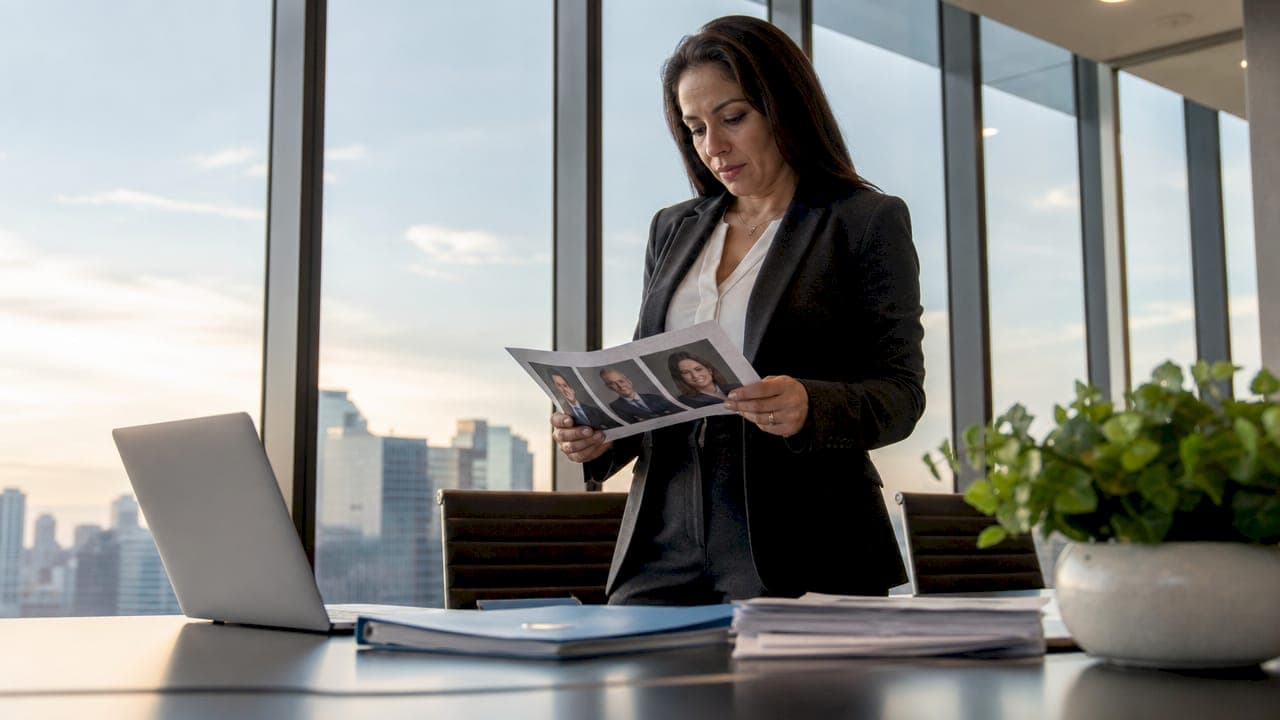
An attorney photo gallery on a website is a direct trust signal that tells prospective clients who you are before you ever speak. The role of attorney photo gallery on websites goes far beyond decoration. It shapes first impressions, drives consultation requests, and communicates your firm's identity in seconds. Attorneys who treat their photo galleries as a marketing asset, not an afterthought, consistently outperform those who rely on generic stock imagery or skip professional photos altogether. Your gallery is often the first real conversation you have with a potential client.
What is the role of attorney photo gallery on websites?
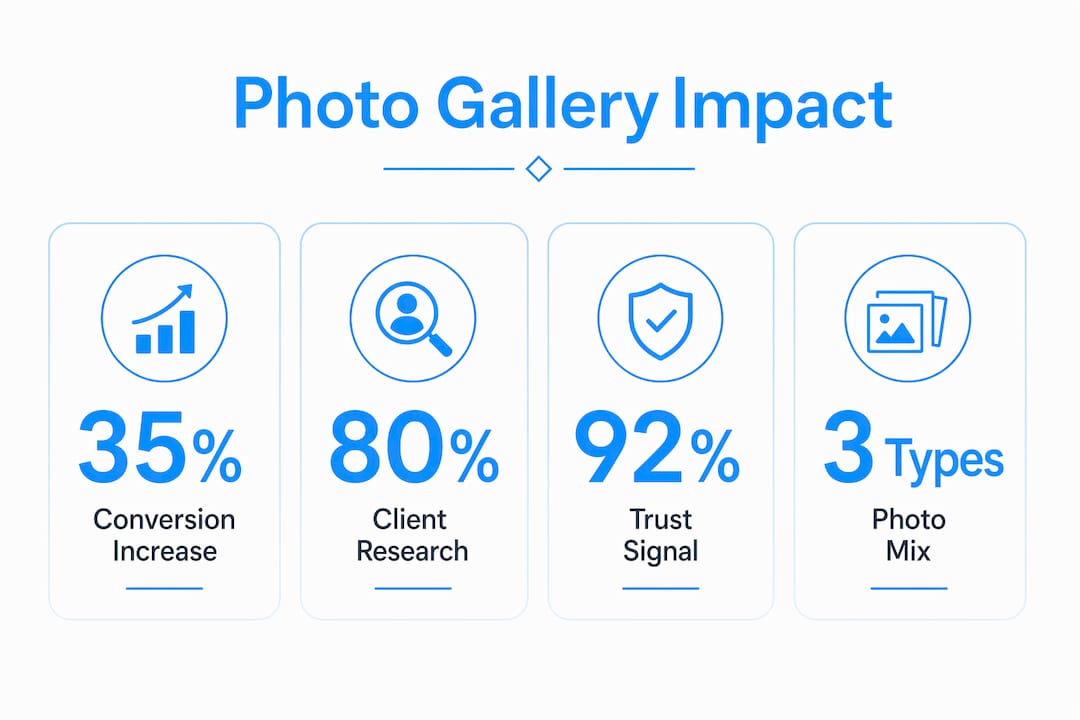
An attorney photo gallery functions as your firm's visual handshake with every site visitor. 92.4% of legal consumers research attorneys online before reaching out. That number means your website photos are doing the selling long before your phone rings.
Photos on attorney websites serve three core functions. They establish credibility, communicate personality, and reduce the anxiety a prospective client feels before making contact. A visitor who can see your face, your office, and your team feels less like they are calling a stranger. That emotional shift directly affects whether they fill out your contact form.
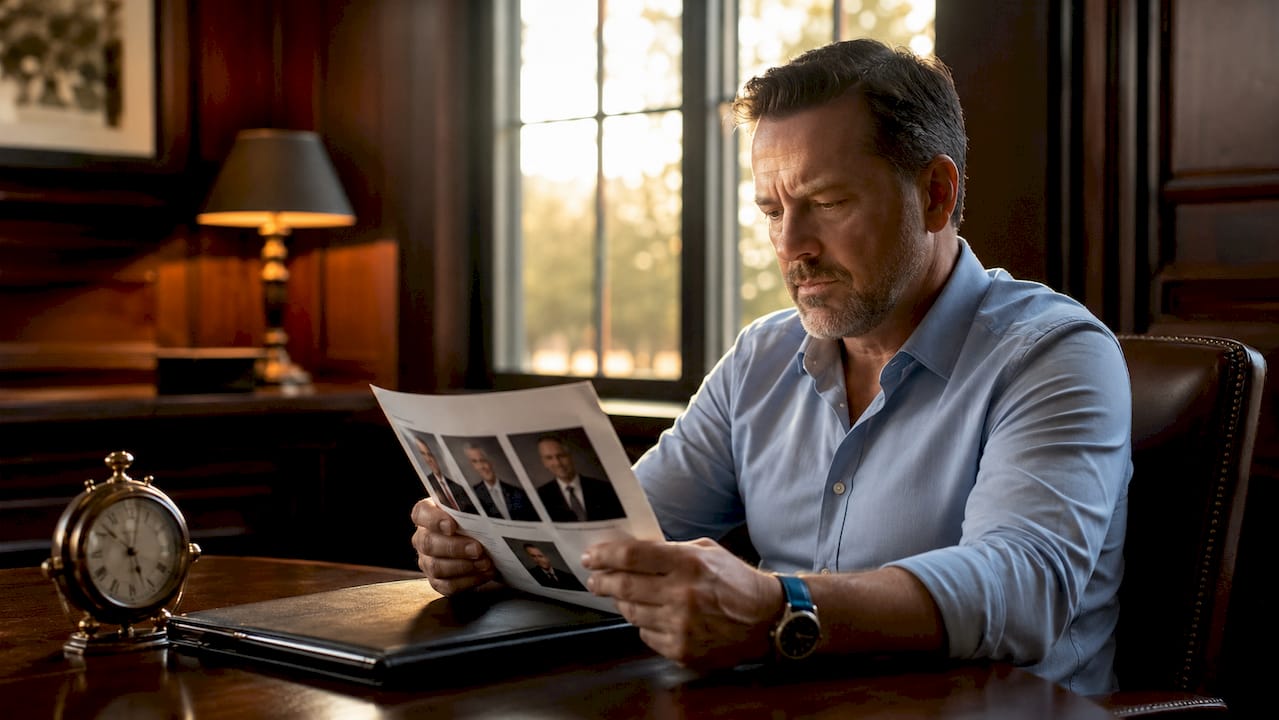
Attorney bio pages are where most of this research happens. 80% of client research occurs specifically on bio pages, making headshots and gallery images the most influential visual assets on your entire site. No other page element carries that weight.
Why do authentic attorney photos outperform stock images?
Authentic photos beat stock images on every measurable dimension. Websites featuring real team members and actual office locations achieve 4.5x higher credibility ratings compared to sites using stock photography. Clients can spot a generic stock photo instantly, and it signals that the firm is not invested in its own presentation.
The conversion data is equally clear. An A/B test showed that real photos increase conversion rates by 35% over stock photos. Landing pages with authentic human images convert 45% better than those with generic stock images. Those are not marginal gains. They represent a significant difference in how many visitors actually contact your firm.
The trust gap is just as striking. Law firms that shift from stock imagery to professional attorney photography see an average 28% increase in consultation rates. Professionally photographed attorneys are perceived as 3x more trustworthy than those using amateur or stock photos. That perception gap closes the moment a firm invests in a proper photo session.
Stock photos also carry a specific risk that authentic images do not. A prospective client may recognize a stock photo from another website, another industry, or even a competitor's site. That recognition destroys credibility instantly.
- Real photos show your actual office environment, which reinforces location and accessibility
- Authentic team photos confirm the firm is active and staffed
- Genuine expressions communicate approachability in ways that posed stock models cannot
- Consistent authentic imagery across your site builds a coherent brand identity
Pro Tip: Hire a photographer who has shot law firm clients before. They understand how to balance authority with approachability, which is a specific skill that general portrait photographers often miss.
How do attorney photos influence client trust and decision-making?
Clients make trust decisions about attorneys within seconds of landing on a bio page. Photos increase perceived trustworthiness by up to 3x compared to text-only profiles. That psychological response is not conscious. It happens before the visitor reads a single word of your biography.
"Attorney photos are often the single most viewed element on bio pages and can do the selling before any contact is made." — Capturely, 2026
The type of emotion your photo communicates matters as much as its technical quality. A family law attorney photographed in a warm, well-lit setting communicates empathy. A litigation attorney photographed in a sharp, formal environment communicates intensity and confidence. Neither is wrong. Both are deliberate choices that align the visual with the practice area.
Environmental portraits go further than standard headshots in building this emotional connection. The most effective bio pages use environmental portraits to create the feeling that a prospect has already met the attorney before calling. That familiarity lowers the barrier to making contact.
- Photos communicate professionalism without requiring the visitor to read anything
- Facial expressions signal empathy, confidence, or approachability depending on the practice area
- Office and team photos confirm the firm is real, established, and accessible
- Consistent visual branding across photos reinforces a coherent professional identity
For attorneys building their online presence from the ground up, the photo gallery is the fastest way to establish credibility with a visitor who knows nothing about you yet.
What types of photos should an attorney gallery include?
Not all attorney photos serve the same purpose. The right mix depends on your practice area, firm size, and the clients you want to attract. The two primary photo types are standard headshots and environmental portraits, and they each do different work.
| Photo Type | Best Use | Emotional Signal |
|---|---|---|
| Standard headshot | Directories, LinkedIn, email signatures | Professional, approachable |
| Environmental portrait | Bio pages, homepage, landing pages | Contextual, authentic, relatable |
| Team group photo | About page, firm overview | Collaborative, established |
| Office/location photo | Contact page, about page | Real, accessible, credible |
Standard headshots are the baseline. Every attorney needs one that is current, well-lit, and consistent in style with the rest of the firm. Headshots appear across more than nine platforms, including firm bio pages, legal directories like Chambers and Best Lawyers, pitchbooks, conference materials, LinkedIn, and email signatures. Consistency across all these platforms reinforces brand recognition before a client ever visits your website.
Environmental portraits are where visual branding for attorneys gets specific. A criminal defense attorney photographed in a courtroom hallway communicates something very different from an estate planning attorney photographed in a calm, book-lined office. The setting does the storytelling.
Pro Tip: Shoot your environmental portraits in your actual office, not a rented studio. Clients who visit in person will recognize the space, which reinforces authenticity and builds immediate rapport.
Align every photo choice with your firm's brand identity. A boutique firm serving high-net-worth clients needs a different visual tone than a high-volume personal injury practice. Your photos should reflect the clients you want, not just the clients you have.
How should attorneys implement photo galleries for maximum impact?
Photo gallery placement determines how much work your images actually do. Most attorneys limit photos to bio pages, but the highest-converting law firm websites place authentic imagery on homepages, practice area pages, and landing pages as well. Each placement serves a different stage of the client's decision process.
- Homepage: Use a strong environmental portrait or team photo above the fold. This is the first image most visitors see, and it sets the tone for the entire site.
- Bio pages: Lead with a professional headshot, then include one or two environmental portraits that show the attorney in context.
- Practice area pages: Include photos that visually match the emotional tone of the practice area. A personal injury page benefits from photos that communicate empathy and strength.
- Landing pages: Authentic human images on landing pages convert 45% better than generic stock alternatives. Place a real attorney photo near your call-to-action.
- About page: Use team group photos and office images to confirm the firm's size, culture, and physical presence.
Technical execution matters as much as photo selection. High-resolution images must be compressed properly so they do not slow your page load time. Slow-loading images hurt both user experience and search rankings. Reliable hosting is the foundation that keeps your images loading fast and consistently across all devices.
Mobile optimization is non-negotiable. Most legal research now happens on smartphones. Your gallery must display correctly on small screens without cropping faces or distorting proportions.
- Compress images to under 200KB without visible quality loss using tools like Adobe Photoshop or Squoosh
- Use descriptive file names and alt text for every photo to support accessibility and search visibility
- Avoid leading your homepage solely with a headshot. Balance photos with firm information and client-focused content
- Update photos every two to three years, or immediately after a significant change in appearance
Attorneys building portfolio pages in 2026 should treat photo galleries as a core component of the page structure, not a supplementary feature added at the end of the design process.
Key Takeaways
An attorney photo gallery is the single most influential trust-building element on a law firm website, directly affecting consultation rates, perceived credibility, and client conversion.
| Point | Details |
|---|---|
| Authentic photos drive conversions | Real attorney photos convert 35% better than stock images in direct A/B tests. |
| Bio pages are the highest-stakes real estate | 80% of client research happens on bio pages, making headshots the most viewed asset. |
| Environmental portraits build emotional connection | Contextual photos communicate practice-area personality and make prospects feel they know you. |
| Consistency across platforms reinforces trust | Matching photo quality across directories, LinkedIn, and your site builds recognition before first contact. |
| Placement beyond bio pages multiplies impact | Homepage and landing page photos increase engagement at every stage of the client decision process. |
What I have learned from watching attorneys get this wrong
The most common mistake I see attorneys make is treating their photo gallery as a checkbox. They book a one-hour shoot, use the first three photos the photographer delivers, and never revisit the gallery again. Five years later, the photo on their bio page looks nothing like the person who walks into the consultation. That gap erodes trust before the meeting even starts.
The second mistake is confusing professional with stiff. I have seen attorneys post photos where they look like they are bracing for a deposition. Clients are not looking for intimidating. They are looking for someone they can trust with a serious problem. The attorneys whose galleries consistently generate consultations are the ones who look like real people, not stock models in suits.
Authentic photography also holds up better than AI-generated images for legal professionals. AI-generated images may cut costs, but they lack the warmth and realness that legal clients specifically need to feel before making contact. A hybrid approach can work for background imagery, but the attorney's own face must always be a real photograph.
The future of legal website photography is moving toward video portraits and short-form introductory clips alongside static galleries. Attorneys who add a 30-second video introduction to their bio page will have a significant advantage over those who rely on photos alone. The principle is the same: the more real you appear, the more clients trust you before they call.
— Kate
How Epdwebsites helps attorneys get their photo galleries right
Attorney photo galleries only perform when the website behind them is built to support them. Image quality, page speed, mobile display, and gallery layout all depend on how the site is designed and hosted.

Epdwebsites has built premium websites for attorneys and professional service providers since 2009. The team designs gallery layouts that showcase your photos at full quality without slowing your site, and the hosting infrastructure keeps your images loading fast on every device. If your current site is burying your best photos in a slow, poorly structured layout, that is a fixable problem. Explore the full range of attorney web design features and see how a purpose-built site changes what your gallery can do for your practice.
FAQ
Why do attorney photo galleries matter for client conversion?
Attorney photo galleries build immediate trust and reduce the hesitation a prospective client feels before making contact. Law firms using professional photography see up to a 28% increase in consultation rates compared to those using stock or amateur images.
What is the difference between a headshot and an environmental portrait?
A headshot is a close-cropped, neutral-background photo used for directories and signatures. An environmental portrait shows the attorney in a real work setting and communicates personality, practice area tone, and brand identity more effectively for bio and landing pages.
How often should attorneys update their website photos?
Attorneys should update their website photos every two to three years, or immediately after a noticeable change in appearance. Outdated photos that no longer match the attorney's current look damage trust when clients meet in person.
Should attorneys use AI-generated images on their websites?
AI-generated images are not recommended as replacements for real attorney photos. Authentic photography builds trust and emotional connection more effectively, which is critical for legal professionals whose clients are making high-stakes decisions.
Where should attorney photos appear beyond the bio page?
Attorney photos should appear on the homepage, practice area pages, and landing pages. Placing authentic human images near calls-to-action on landing pages converts 45% better than pages using generic stock imagery.