
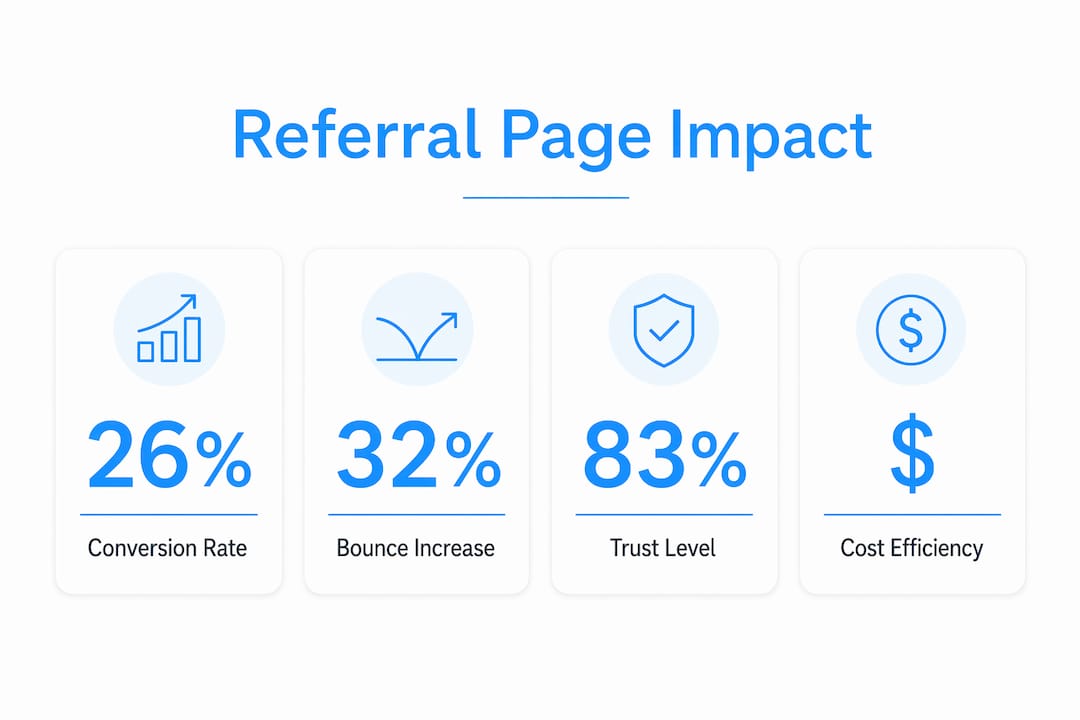
A referral page on a medical website is a dedicated landing page built specifically for patients arriving through a provider recommendation or peer referral. The role of referral pages on medical websites goes far beyond a simple welcome screen. These pages retain the context of the referral, display relevant trust signals, and guide high-intent visitors toward a single action. Referral pages convert at an average rate of 26%, which is dramatically higher than most other acquisition channels. That number reflects a fundamental truth: referred patients arrive already primed to trust you. The industry term for this concept is a "referral landing page," and building one correctly is one of the highest-return investments a medical practice can make in its website.
What is the role of referral pages on medical websites?
Referral pages outperform generic practice homepages because they preserve the trust and intent a patient carries from the moment of referral. When a physician refers a patient to a specialist, or when a satisfied patient recommends a practice to a friend, that recommendation carries weight. A generic homepage wastes that momentum. It greets every visitor the same way, regardless of how they arrived or what they already know.
A well-built referral landing page does the opposite. It acknowledges the referral source, confirms the patient is in the right place, and removes every obstacle between arrival and appointment booking. Referred visitors convert 3–5 times better than cold traffic when the referral page retains context, displays rewards clearly, and personalizes content. That conversion gap exists because context preservation reduces cognitive friction.

The speed of the page matters just as much as the content. Bounce rates increase 32% when page load time rises from one second to three seconds. A patient who clicks a referral link and waits too long will leave before reading a single word. Speed is not a technical nicety. It is a clinical conversion factor.
Medical referral pages also address a trust dynamic unique to healthcare. 83% of individuals trust recommendations from friends and family, which means referred patients arrive with a strong prior belief that the practice is credible. The referral page must confirm that belief immediately, not make the patient hunt for reassurance.
Referral page design best practices for medical websites
The most effective referral pages share a clear structure. They lead with a headline that answers one question: "What's in it for me?" They present a single, dominant call to action. They eliminate distracting navigation menus that pull visitors away from the intended path.
A strong medical referral page follows these design principles:
- Single CTA above the fold. Place one button, one form, or one phone number at the top of the page. Giving patients multiple options at once reduces conversion.
- Headline focused on mutual benefit. State the reward or value clearly. For a patient referral program, this means showing what both the referrer and the new patient receive. Dual-sided benefits prominently displayed above the fold increase referral program participation.
- Real provider photos and credentials. Generic stock images erode trust. Real photos of the physician, their board certifications, and patient testimonials build the credibility that referred patients expect. Real provider photos significantly enhance referral page credibility compared to generic imagery.
- A visual three-step process. Show patients exactly what happens after they click: schedule, confirm, attend. Three steps feel manageable. Ambiguity feels risky.
- Mobile-first layout with large buttons. Mobile devices account for 70–80% of referral traffic in healthcare. Buttons must be large enough to tap, forms must be short, and text must be readable without zooming.
- Page load time under two seconds. This is the threshold that protects conversion. Anything slower triggers the bounce rate spike described above.
Pro Tip: Test your referral page on a 4G mobile connection, not your office Wi-Fi. That is the real-world condition most referred patients experience when they click your link.
The program terms and FAQ links belong on the page, but below the fold. Patients who need that detail will scroll. Patients who are ready to act should not have to scroll past it first.
How referral pages fit into medical website navigation
Referral pages do not exist in isolation. Their placement within the broader website architecture determines how many patients actually reach them. A referral page buried in a footer link or accessible only through a direct URL will underperform simply because patients cannot find it.
Healthcare website navigation should mirror patient mental models, not the internal organizational chart of a health system. Patients think in terms of conditions, symptoms, and doctors, not departments and administrative divisions. Referral pages belong inside the hubs patients already visit:
- The "Find a Doctor" section, where patients evaluate providers before committing
- Condition and service pages, where patients research their diagnosis and next steps
- The patient portal login area, where existing patients who want to refer friends are already engaged
- Appointment confirmation pages, which represent a peak satisfaction moment ideal for referral prompts
Organizing a health system website around the way patients actually think, rather than the way the institution is structured, is the single most effective change a healthcare marketer can make to improve referral flow and patient engagement. Northwestern Medicine's approach to patient-centric navigation demonstrates that aligning digital architecture with patient mental models produces measurably better outcomes.
Personalized referral URLs reinforce this architecture. When a referring physician or a satisfied patient shares a unique link, that link carries attribution data. The practice knows exactly where the patient came from, which provider sent them, and which page they landed on. That data feeds directly into marketing analytics and helps identify which referral sources produce the highest-value patients.
Linking referral pages to patient portal integration and appointment scheduling tools removes the final barrier between referral and conversion. A patient who can book an appointment directly from the referral page does not need to call, navigate to another page, or remember to follow up later.
Measurable outcomes of optimized referral pages in healthcare
The business case for referral pages in healthcare is concrete. Referred patients do not just convert at higher rates. They behave differently once they become patients.
| Metric | Referral patients | General acquisition |
|---|---|---|
| Average conversion rate | 26% | Significantly lower across most channels |
| Patient spend | 200% higher than average | Baseline |
| Retention duration | 37% longer than average | Baseline |
| Share of total revenue | 25–30% in health-focused sectors | Varies by channel mix |
Referred patients spend more because they arrive with higher trust and lower skepticism. They stay longer because the relationship began with a personal recommendation, which creates a stronger initial bond with the practice. The 37% retention advantage compounds over time, reducing the cost of keeping a patient active in the practice.
The acquisition cost efficiency is equally significant. Referral programs require investment in page design, program management, and reward fulfillment. But the cost per acquired patient through referral consistently runs lower than paid search or display advertising in healthcare. A practice that captures even 25% of its new patients through referral channels is operating with a structurally lower marketing cost base.
For healthcare marketers, the implication is clear. Referral pages are not a supplementary feature. They are a primary growth lever. Practices that treat their referral landing page as an afterthought are leaving a measurable revenue gap on the table. Reviewing healthcare website design best practices alongside referral page strategy produces the best results.
Key Takeaways
A well-designed referral page is the single highest-converting asset a medical website can deploy, turning referred patients into booked appointments at rates that no other channel matches.
| Point | Details |
|---|---|
| Referral pages convert at 26% | This rate far exceeds most acquisition channels, making referral pages a top-priority asset. |
| Speed under two seconds is non-negotiable | Bounce rates spike 32% at three-second load times, killing conversions before the page is read. |
| Mobile-first design is required | 70–80% of referral traffic in healthcare arrives on mobile devices. |
| Navigation placement drives discoverability | Referral pages must appear in "Find a Doctor" and condition hubs, not buried in footers. |
| Referred patients retain 37% longer | Higher retention and 200% greater spend make referral patients the most valuable acquisition source. |
Why I think most medical practices underestimate their referral pages
After years of working with professional service providers on their websites, I have noticed a consistent pattern. Medical practices spend significant resources on their homepage design and almost nothing on their referral landing page. They treat the referral page as a form, not a conversion asset.
That is a mistake with a measurable cost. Patients who arrive through a referral are the warmest leads a practice will ever see. They already trust the source. They already have a reason to book. The referral page is the one moment where the practice controls the entire experience, and most practices hand that moment to a generic "Contact Us" page.
The shift I have seen work is treating the referral page as a trust confirmation system, not just a scheduling tool. When a page shows the referring physician's name, the specific service being recommended, and a clear next step, conversion rates climb. When it shows a stock photo and a phone number, patients hesitate.
The practices that grow fastest through referrals are the ones that align their referral page with their broader digital reputation. Patients increasingly validate referrals by checking online reviews before they book. The referral page and the review profile work together as a single trust ecosystem. A strong referral page that links to verified credentials and real patient feedback closes that loop.
My practical advice: audit your referral page the same way you audit your homepage. Check load speed, check mobile layout, check whether the CTA is visible without scrolling. Then check your clinic navigation structure to confirm patients can actually find the page. Most practices discover at least two fixable problems in the first ten minutes of that audit.
— Kate
How Epdwebsites builds referral pages that convert for medical practices
Medical practices that want referral pages built to perform need more than a template. They need a design partner who understands both healthcare trust dynamics and conversion-focused web architecture.

Epdwebsites has specialized in professional website design for medical practices since 2009. Every referral page built through Epdwebsites meets the technical benchmarks that matter: load times under two seconds, mobile-first layouts, and trust signals placed where referred patients expect to find them. The website features for medical professionals include full integration with appointment scheduling tools and patient portals, so referred patients move from landing page to booked appointment without friction. If you want to see what a referral-ready medical website looks like in practice, the Epdwebsites portfolio shows completed projects across healthcare and professional services.
FAQ
What is a referral page on a medical website?
A referral page is a dedicated landing page designed for patients arriving through a provider recommendation or peer referral. It retains referral context, displays trust signals, and guides patients toward a single action such as booking an appointment.
Why do referral pages convert better than homepages?
Referral pages convert better because they match the intent and trust level of referred visitors. Referred visitors convert 3–5 times better than cold traffic when the page retains referral context and presents a clear, personalized call to action.
How fast should a medical referral page load?
A referral page should load in under two seconds. Bounce rates increase 32% when load time rises from one to three seconds, which directly reduces the number of referred patients who complete a booking.
Where should referral pages appear in medical website navigation?
Referral pages perform best when placed within "Find a Doctor" sections, condition and service pages, and patient portal areas. These are the hubs where referred patients naturally look for confirmation before committing to an appointment.
How much revenue do referral programs generate for healthcare practices?
Referral strategies account for 25–30% of total revenue in health-focused sectors. Referred patients also spend 200% more and retain 37% longer than patients acquired through other channels, making referral programs one of the most cost-efficient growth tools available to medical practices.